

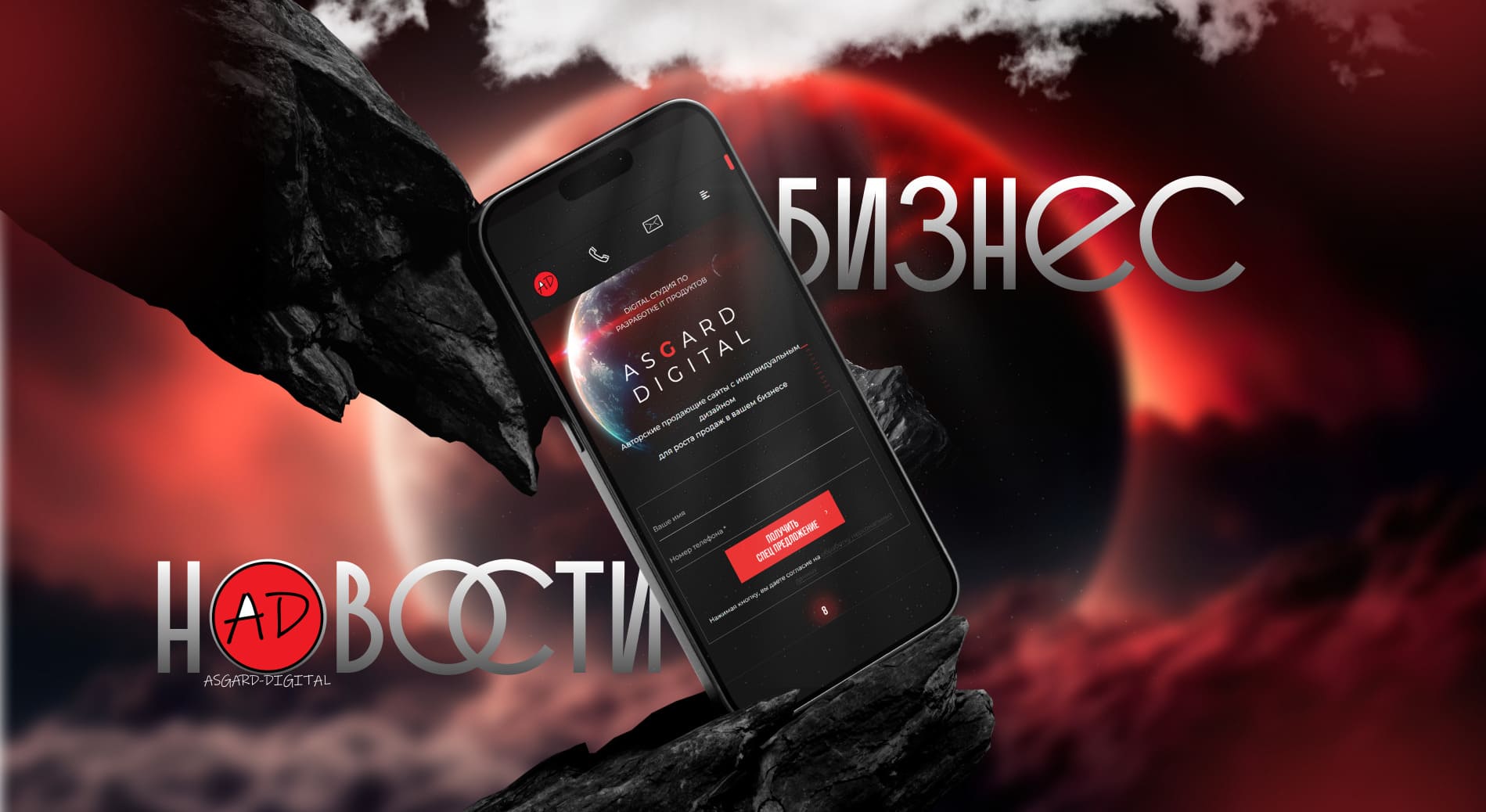
Website design: how to create an attractive and functional resource ✨
Creating a successful website is a complex process that requires a comprehensive approach. The key element of this process is design. It not only determines the visual perception of your resource, but also directly affects its functionality, usability and, ultimately, conversion. An attractive and functional design is not just a pretty picture, it is a strategically built system designed to solve specific business problems. In this article, we'll look at the key aspects of creating such a design, from the initial planning stage to the final publication.
1. Understanding the target audience and project goals 🎯
Before starting visual design, it is necessary to clearly define for whom the site is being created and what tasks it should solve. Without understanding the target audience (TA), it is impossible to create an effective design. It is important to answer the following questions:
- Who is your target audience? What is their age, gender, interests, education level, technological literacy? What is their lifestyle? Where do they spend their time online?
- What are the goals of your website? Selling goods or services? Brand promotion? Providing information? Lead collection? What information needs to be conveyed to visitors? What actions do you want them to take on the site?
- What competitors do you have? Analysis of competitors' websites will allow you to understand which solutions are already working and which are not. What can be improved and how to stand out from competitors?
The answers to these questions will form the basis of the design concept and determine its style, color palette, structure and functionality.
2. Concept development and prototype creation 💡
After analyzing the target audience and project goals, you can begin to develop a design concept. At this stage the following are determined:
- Design style: minimalism, modern, classic, retro, etc. The choice of style should match the brand and target audience.
- Color palette: colors should be harmonious, reflect the brand and evoke the right emotions in users.
- Fonts: Font selection should be readable and consistent with the design style.
- Site structure: logical arrangement of elements on pages, easy navigation, intuitive interface.
Based on the concept, a website prototype is created - a draft version that displays the structure and functionality of the future resource. A prototype allows you to visualize ideas and make necessary adjustments at an early stage, which significantly saves time and resources. It can be created in the form of a wireframe (simple frame) or a more detailed mock-up (layout).
3. Visual design and interface design 🎨
Once the prototype is approved, you can begin creating the visual design. This stage includes:
- Design development of individual pages: home page, product/service pages, contact page, blog, etc.
- Creation of graphic elements: logo, icons, banners, illustrations.
- Image selection and adaptation: Using quality and relevant images that enhance the content experience.
- Adaptive layout: the design must be displayed correctly on all devices (desktops, tablets, smartphones).
At this stage, it is important to ensure that the design is not only beautiful, but also user-friendly. It is necessary to take into account usability principles such as:
- Ease of Navigation: The user should be able to easily find the information they need.
- Text Readability: Text should be easy to read, with proper choice of fonts and text size.
- Intuitiveness of the interface: Controls should be clear and easily accessible.
- Fast loading: The site should load quickly so as not to irritate users.
4. Selecting a CMS and developing functionality ⚙️
The choice of content management system (CMS) depends on the requirements of the project. Popular CMS include WordPress, Joomla, Drupal and others. The choice of CMS affects the functionality of the site, its scalability and ease of content management.
Functional development includes:
- Integration with payment systems: for e-commerce sites.
- Feedback forms: for collecting leads and communicating with clients.
- Comment system: for sites with blogs or forums.
- Integration with social networks: to increase user engagement.
- Analytics system: to track website performance.
5. Testing and optimization 🔬
Before launching the site, it is necessary to conduct thorough testing to identify and correct all errors. Testing includes:
- Usability testing: checking the usability of the site by real users.
- Performance Testing: Checking site loading speed.
- Compatibility testing: checking the display of the site on different browsers and devices.
After testing, it is necessary to make the necessary adjustments and optimize the site to increase its efficiency. Optimization includes:
- SEO optimization: to improve the site’s position in search results.
- Loading speed optimization: to improve user experience.
- Conversion optimization: to increase the number of targeted user actions.
Examples of successful website designs (cases) 🎉
Examples of our work demonstrating the successful application of the principles described above can be seen here: https://Asgard Digital.ru/#raboty
Take a look at the variety of styles and solutions we offer our clients. Each project is developed individually, taking into account the specifics of the business and the target audience. We strive to create not only beautiful, but also effective websites that help our clients achieve their business goals.
6. Support and further development 🌱
Once the site is launched, its work does not end. Regular maintenance must be carried out, performance monitored and necessary changes made. This includes:
- Content updates: Regular addition of new materials to attract and retain users.
- Analytics monitoring: tracking key website performance indicators and making adjustments to the development strategy.
- Maintenance: Regular software updates and troubleshooting.
- Adapt to change: adapt design and functionality to changes in search algorithms, design trends and technology.
Conclusion 🏆
Creating an attractive and functional website is a complex but necessary process for any business in today's digital world. The success of the project depends on an integrated approach, including understanding the target audience, developing a thoughtful concept, creating a high-quality design, choosing a suitable CMS, testing and optimization, as well as further support and development. We hope this article has helped you better understand the key aspects of creating an effective web resource. Contact professionals to get quality results and achieve your business goals. We at Asgard Digital are ready to help you with this! Contact us to discuss your project.